
Creating a complete brand with AI requires more than generating a logo or one attractive product image.
A real brand needs consistency across its visual identity, packaging, advertising, website, retail environment, product photography and customer experience.
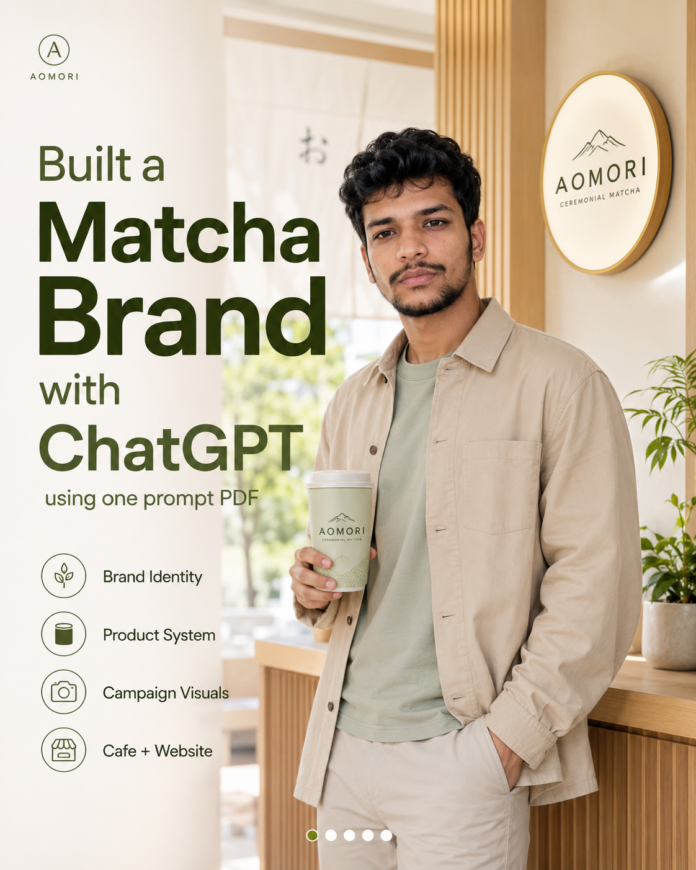
To demonstrate this process, we created AOMORI, a fictional premium ceremonial matcha brand developed using a structured ChatGPT prompt system.
The project includes:
- Brand positioning and personality
- Logo and typography direction
- Colour and material system
- Matcha packaging concepts
- Product photography prompts
- Lifestyle campaign visuals
- Ritual tools and gift sets
- Social-media advertisements
- Matcha café and retail concepts
- Outdoor advertising
- Mobile app design
- Ecommerce website design
You can download the complete AOMORI prompt PDF from this article and use it as a framework for creating your own AI-generated brand concepts.
Note: AOMORI is a fictional demonstration brand created for educational and creative purposes. It is not connected to an existing matcha company.
Download the AOMORI ChatGPT Prompt PDF
The downloadable PDF contains a complete structured prompt system for developing a premium matcha brand with ChatGPT.
It covers brand identity, packaging, product campaigns, lifestyle photography, retail design, social media, mobile app concepts and website design.
AOMORI Premium Matcha Prompt System
Format: PDF
Brand category: Premium ceremonial matcha
Includes: Identity, packaging, campaigns, retail and digital design
Suitable for: ChatGPT image generation, branding concepts and creative direction
AOMORI is a fictional demonstration brand. The prompt architecture and presentation belong to Axontic Technology Pvt. Ltd. Commercial projects require trademark, labelling and apparel compliance checks.
What Is the AOMORI Prompt System?
The AOMORI prompt system is a structured creative framework designed to help ChatGPT develop a complete premium matcha brand.
Instead of generating every image with a separate and unrelated prompt, the system establishes consistent rules before any visual is created.
These rules define:
- Brand personality
- Product proportions
- Packaging materials
- Logo placement
- Typography hierarchy
- Colour usage
- Photography direction
- Campaign messaging
- Retail styling
- Website and app design
This approach helps prevent the visual inconsistency commonly seen in AI-generated branding projects.
A simple prompt may create one attractive image. A structured prompt system can create an entire connected brand world.
Can ChatGPT Create a Complete Brand?
ChatGPT can help develop a complete fictional brand concept when it receives a detailed and structured creative brief.
It can assist with:
- Brand strategy
- Naming and positioning
- Visual identity direction
- Packaging concepts
- Advertising ideas
- Product photography prompts
- Website structure
- Mobile app concepts
- Social-media campaigns
- Brand guidelines
However, ChatGPT should be treated as a creative development tool rather than a replacement for professional design, legal or production review.
A commercially launched brand may still require:
- Trademark clearance
- Packaging compliance
- Regulatory review
- Product testing
- Market research
- Professional design refinement
- Print-production checks
Why Structured Prompts Produce Better Brand Designs
A basic prompt may generate an attractive product image, but it does not automatically create a consistent brand system.
For example, a simple prompt may say:
Create premium matcha packaging with a minimalist visual style.
That prompt may produce one useful image. However, the next generation could change the logo, package shape, label placement, typography, colours or material finish.
A structured prompt system reduces this problem by creating an identity lock.
The identity lock defines which elements must remain consistent across every image, including:
- Product dimensions
- Container geometry
- Lid design
- Label hierarchy
- Logo placement
- Variant colours
- Material finishes
- Typography
- Photography style
Repeating these rules in every prompt helps the generated assets feel like they belong to the same brand.
The AOMORI Brand Concept
AOMORI is positioned as a contemporary ceremonial matcha brand built around the idea of a calm daily ritual.
The brand reframes preparing and drinking matcha as a composed pause before work, travel, exercise or creative focus.
Brand Personality
AOMORI is designed to feel:
- Composed
- Premium
- Sensory
- Progressive
- Minimal
- Human
- Confident
- Ritual-led
- Design-led
- Culturally respectful
Primary Tagline
STILLNESS, WHISKED.
Supporting Messages
- A clearer kind of energy
- The daily green ritual
- The moment before motion
- Tools for the daily pause
The messaging avoids exaggerated health claims and instead focuses on preparation, product experience, routine and clarity.
AOMORI Logo and Typography Direction
The visual identity begins with a refined uppercase AOMORI wordmark.
The intended logo direction includes:
- Wide letter spacing
- Calm proportions
- Minimal ornamentation
- Strong readability
- Contemporary wellness positioning
- Restrained cultural references
The identity avoids common visual clichés such as random Japanese characters, decorative seals, cherry blossoms or temple imagery.
Display Typography
The primary display typeface is intended for:
- Campaign headlines
- Product names
- Social-media covers
- Retail signage
- Launch messages
It should feel bold, modern and highly legible.
Supporting Typography
A secondary typeface is used for:
- Product information
- Origin details
- Preparation instructions
- Ingredients
- Captions
- Ecommerce content
Using two clear typographic roles creates a practical hierarchy across packaging, advertising and digital design.
AOMORI Colour Palette
The AOMORI colour system is inspired by matcha, natural materials, ceramics and bright contemporary wellness interiors.
Tea Leaf
A vivid but natural ceremonial green used for prominent brand accents.
Deep Moss
A darker green used for contrast, authority and premium depth.
Rice Paper
A warm cream used for packaging labels, backgrounds and negative space.
Mist
A pale grey-green used for digital interfaces and supporting surfaces.
Bamboo
A warm tan inspired by whisks, scoops and natural preparation tools.
Stone
A soft mineral neutral inspired by handmade bowls and architectural surfaces.
Oxide Clay
A warm handcrafted accent used selectively across packaging and editorial layouts.
Charcoal
A deep neutral used mainly for typography and controlled contrast.
The overall palette is designed to feel bright, calm and premium rather than dark, rustic or excessively traditional.
A Complete Matcha Packaging System
AOMORI was designed as a complete product family rather than one isolated package.
Each product shares the same visual language, label hierarchy and material logic.
Ceremonial No. 01
A compact cylindrical metal tin designed for premium ceremonial matcha.
Its design includes:
- Soft-touch green finish
- Brushed metal lid
- Warm ivory label
- Minimal product information
- 30-gram format
Daily No. 02
A slightly taller cylindrical tin designed for everyday matcha preparation.
Its design includes:
- Muted jade body
- Brushed metal lid
- Clear preparation information
- 50-gram format
Culinary No. 03
A resealable pouch designed for recipes, smoothies and cooking.
Its design includes:
- Flat-bottom structure
- Deep forest finish
- Clear usage information
- 100-gram format
Matcha Sticks
Pre-measured matcha sachets presented inside a rigid drawer-style carton.
They are designed for:
- Travel
- Office use
- Gym bags
- Daily routines
- Subscription boxes
Latte Blend
A wider paper canister designed specifically for matcha latte preparation.
It uses softer oat, cream and moss tones to distinguish it from ceremonial products.
Cold Matcha Bottle
A reusable bottle concept featuring:
- Frosted cylindrical glass
- Rounded shoulders
- Brushed metal cap
- Removable mixing screen
- Minimal label design
Ritual Tools
The AOMORI product system also includes:
- Bamboo whisk
- Bamboo scoop
- Handmade matcha bowl
- Ceramic whisk holder
- Fine stainless-steel sieve
- Preparation tray
These accessories transform the product into a complete ritual experience.
How the Prompt Maintains Product Consistency
AI image generators often redesign products between generations.
A tin may become wider, the lid may change, the label may move or the logo may appear differently in each image.
The AOMORI prompt system specifically instructs ChatGPT not to change:
- Tin diameter
- Lid shape
- Bottle geometry
- Label hierarchy
- Product proportions
- Variant colours
- Logo position
- Material finishes
- Product scale
This identity lock is one of the most important parts of the workflow.
Without it, the final project may look like several unrelated concepts instead of one commercial brand.
AI Product Photography Direction
The PDF includes prompts for creating premium commercial product photography.
The visual direction focuses on:
- Bright natural daylight
- Pale oak surfaces
- Honed stone
- Handmade ceramics
- Warm cream backgrounds
- Controlled matcha-green accents
- Realistic product scale
- Natural shadows
- Clear package labels
- Smooth premium materials
Supporting props include:
- Natural matcha powder
- Bamboo tools
- Ceramic bowls
- Linen cloth
- Fine sieves
- Clear water
- Pale wood trays
- Minimal notebooks
The system avoids excessive visual effects such as exploding powder, floating debris, neon-green matcha or unrealistic synthetic glow.
Lifestyle Campaign With a Consistent Model
The AOMORI campaign demonstrates how one male model can be used across multiple brand touchpoints.
The same character may appear:
- Preparing matcha in the morning
- Holding a cold matcha bottle
- Carrying matcha while travelling
- Using matcha sticks at work
- Visiting an AOMORI café
- Appearing in website banners
- Appearing in social advertisements
- Preparing matcha with a whisk and bowl
Using the same model creates stronger visual continuity between lifestyle photography, advertising, retail and digital design.
The model should interact naturally with the products rather than appearing like a generic stock-photo subject.
The Daily Matcha Ritual
The AOMORI system also explains how the product is prepared.
A typical matcha ritual can include:
- Sifting the matcha powder
- Measuring the correct amount
- Adding properly heated water
- Whisking with a bamboo chasen
- Pouring the prepared matcha
- Drinking slowly
- Cleaning and storing the tools
This educational content can be reused across:
- Instagram carousels
- Product pages
- Mobile app tutorials
- Packaging inserts
- Email campaigns
- Retail displays
- Short-form videos
- Customer onboarding
Educational content helps customers understand the product while strengthening the overall brand experience.
AOMORI Matcha Café and Retail Concept
The prompt system expands the brand into a physical matcha café and retail environment.
Interior Direction
The café uses:
- Pale oak
- Warm cream walls
- Light stone counters
- Natural greenery
- Soft daylight
- Minimal signage
- Open product shelving
- Handmade ceramics
- Clean menu systems
Retail Applications
The AOMORI identity can appear across:
- Storefront signage
- Counter branding
- Menu boards
- Product displays
- Shopping bags
- Cups
- Window graphics
- Staff uniforms
- Transit advertisements
- Outdoor posters
This makes the brand feel scalable beyond product packaging.
Social Media and Outdoor Advertising
The AOMORI prompt PDF includes concepts for editorial posters, Instagram campaigns and out-of-home advertising.
Suggested campaign messages include:
- STILLNESS, WHISKED.
- THE DAILY GREEN RITUAL.
- A CLEARER KIND OF ENERGY.
- THE MOMENT BEFORE MOTION.
- TOOLS FOR THE DAILY PAUSE.
These ideas can be adapted for:
- Instagram posts
- Instagram Stories
- Paid advertisements
- Retail posters
- Bus shelters
- Metro screens
- Digital displays
- Billboards
- Product-launch campaigns
Each execution should use one main product, one clear message and the same visual hierarchy.
AOMORI Mobile App Concept
The AOMORI mobile app is designed to support preparation, product education, shopping and subscriptions.
Possible app features include:
- Matcha preparation timers
- Water-temperature guidance
- Powder-to-water ratios
- Product recommendations
- Routine tracking
- Subscription management
- Order tracking
- Matcha education
- Origin information
- Store locator
- Personal preparation routines
The app should focus on practical preparation and product information rather than making medical or guaranteed performance claims.
AOMORI Website Concept
The website combines ecommerce with editorial storytelling.
A possible homepage structure includes:
- Hero campaign
- Featured products
- Shop-by-category section
- Matcha ritual guide
- Product information
- Origin and sourcing story
- Bestsellers
- Subscription options
- Journal articles
- Community membership
- Store locator
- Footer navigation
The main website call to action is:
SHOP MATCHA
The supporting call to action is:
LEARN THE RITUAL
The goal is to make it easy for visitors to understand the products before purchasing.
How to Use the AOMORI Prompt PDF
1. Begin With the Brand Identity
Start by reviewing the positioning, personality, logo direction, typography, colours and product rules.
Do not immediately begin generating random product images.
2. Generate the Brand Foundation
Create:
- Logo presentation
- Typography board
- Colour palette
- Material board
- Brand moodboard
Review these outputs before creating packaging.
3. Generate the Product Family
Create the complete product lineup using the same visual direction.
Check:
- Logo consistency
- Product proportions
- Label hierarchy
- Product names
- Variant colours
- Material finishes
4. Create Campaign Images Separately
Generate product photographs, lifestyle images, café scenes and digital mockups separately.
This usually produces better results than asking ChatGPT to generate an entire case study in one image.
5. Assemble the Final Carousel
Use a design application such as:
- Canva
- Figma
- Adobe Photoshop
- Adobe Illustrator
- Affinity Designer
This gives you more control over typography, alignment, spacing and spelling.
6. Review Every Image
Check each output for:
- Misspelled words
- Inconsistent logos
- Incorrect packaging
- Distorted hands
- Duplicate products
- Unrealistic shadows
- Changed bottle shapes
- Random symbols
- Unreadable labels
Best Practices for Creating Brands With AI
Use One Identity Lock
Repeat the same product and visual rules in every generation.
Generate One Scene at a Time
Complex multi-scene prompts often reduce image quality and consistency.
Add Important Typography Manually
AI-generated text may contain spelling errors. Add important headings and product information during the final layout stage.
Keep Approved Reference Images
Reuse approved product and model references when generating new scenes.
Separate Concept Development From Production
AI is useful for concept development, but final commercial work should still be reviewed by designers, marketers, production specialists and legal professionals.
Avoid Copying Existing Brands
Use established brands only as general quality references. Do not copy protected logos, slogans, packaging structures or campaign layouts.
Who Can Use This Prompt PDF?
The AOMORI prompt system can be useful for:
- Graphic designers
- Branding students
- AI creators
- Social-media designers
- Marketing agencies
- Prompt engineers
- Ecommerce founders
- Content creators
- Product photographers
- Creative directors
Beginners can use the prompts as a guided workflow, while experienced designers can adapt the system for their own creative process.
Can This Prompt System Be Adapted for Other Products?
Yes.
The same structured workflow can be adapted for:
- Coffee
- Tea
- Skincare
- Beverages
- Fragrances
- Wellness products
- Food brands
- Fashion accessories
- Luxury gifting
- Personal-care products
The product architecture, materials, personality and visual language should be redesigned for each category rather than simply replacing the brand name.
Frequently Asked Questions
Can ChatGPT design a complete brand?
ChatGPT can help create a complete fictional brand concept, including positioning, identity direction, packaging prompts, advertising ideas, website layouts and digital experiences. Commercial deployment still requires professional review.
What is included in the AOMORI prompt PDF?
The PDF includes prompts for brand identity, typography, colour, materials, packaging, product photography, lifestyle campaigns, ritual tools, social media, retail, outdoor advertising, mobile app and website design.
Is AOMORI a real company?
No. AOMORI is a fictional demonstration brand created to showcase a structured AI branding workflow.
Is the AOMORI prompt PDF free?
The PDF can be downloaded from the button provided in this article.
Which AI tool should I use with these prompts?
The prompts are primarily designed for ChatGPT image-generation workflows, but they can also be adapted for other capable AI image tools.
Why do AI-generated product images change between prompts?
AI image generators may reinterpret product geometry, logos, labels and proportions during each generation. Repeating a detailed identity lock and using approved reference images can reduce these changes.
Should I generate the complete carousel in one prompt?
Generating each important scene separately usually produces better results. The final carousel can then be assembled manually in Canva, Figma or another design application.
How can I avoid spelling mistakes in AI-generated images?
Keep generated text minimal, inspect every image carefully and add important typography manually during the final layout process.
Can this workflow be used for client projects?
It can be used for ideation and concept development. Client-ready work should also include trademark checks, professional refinement, production testing and legal review.
How Can You Build a Matcha Brand With ChatGPT?
To build a matcha brand with ChatGPT, begin by defining the brand personality, logo direction, typography, colour palette, packaging structure and product identity rules.
Next, use the same rules to generate product photography, lifestyle campaigns, ritual content, retail concepts, website layouts and mobile app screens.
The strongest results come from repeating the same identity lock across every prompt and assembling the final designs manually.
Final Thoughts
A strong AI branding project is not created by one impressive image.
It is created by maintaining the same strategy, identity, product rules and visual language across every customer touchpoint.
The AOMORI prompt PDF demonstrates how ChatGPT can help develop:
- A coherent brand identity
- A connected packaging family
- Consistent product photography
- Lifestyle campaigns
- Retail applications
- Educational content
- Mobile interfaces
- Ecommerce experiences
The key is to stop treating prompts as isolated instructions.
Create the system first. Then use that system to build the brand.